

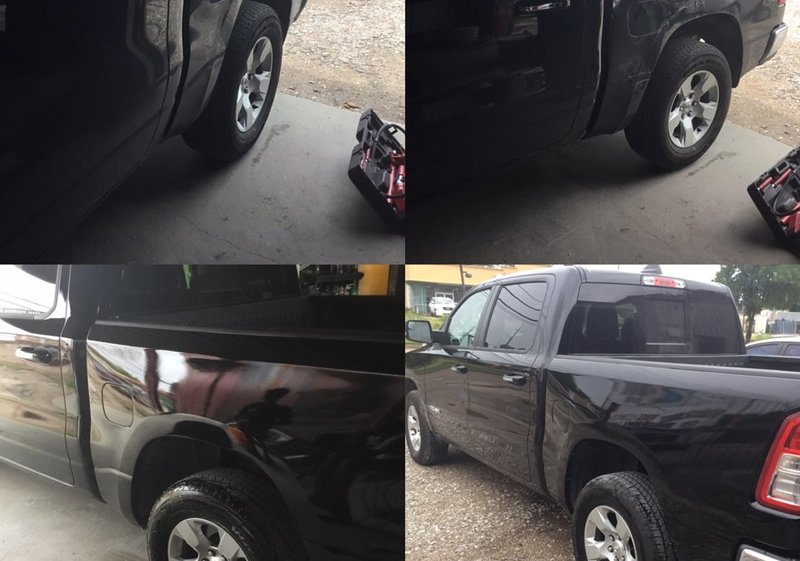
Frame Straightening in Houston, TX
Restoring Critical Safety Ratings and Crumple-Zone Integrity for Trucks and Unibody Cars
Auto Body Collision in Houston provides expert frame and structural straightening using computerized 3D laser measurement and hydraulic pulling systems. These precision services restore vehicle geometry, safety ratings, and crumple-zone integrity for both full-frame trucks and unibody passenger vehicles according to strict original equipment manufacturer (OEM) specifications.
Auto Body Collision provides expert frame and structural straightening services in Houston, TX, operating out of its specialized collision center at 7107 Scott St. Even minor vehicle impacts can shift a vehicle’s internal skeleton, causing structural bends and twists that are invisible beneath external body panels.
Correcting structural misalignment promptly is essential for highway safety. Driving with a damaged frame compromises handling, causes severe tire wear, throws off suspension geometry, and severely impairs the vehicle’s ability to absorb and redirect energy during a future collision.
Comprehensive Frame & Structural Straightening Services
Understanding Full-Frame vs. Unibody Construction
Modern automotive manufacturing relies on two primary structural designs:
- Full-Frame (Body-on-Frame): Standard in full-size trucks, vans, and large SUVs. The heavy steel chassis exists as a standalone skeleton, and the cabin body is bolted onto it. Impacts can bend, sag, or twist the steel rails, requiring high-tonnage hydraulic force to pull back into square alignment.
- Unibody Construction: Used in virtually all modern sedans, crossovers, and compact vehicles. The body panels, floor pan, and roof pillars are welded together into a single unified cage. Unibody frames feature engineered "crumple zones" designed to collapse predictably during an impact, preserving cabin space. Laser-guided pulling systems allow technicians to restore these critical safety cages without weakening the surrounding metal.
Step-by-Step Frame Straightening Process
Computerized 3D Laser Measurement
The vehicle is mounted to a specialized anchoring rack. Ultrasonic or laser measuring sensors scan targets under the chassis, mapping the exact three-dimensional deformation against the manufacturer's original blueprints.
Multi-Point Hydraulic Pulling
Heavy-duty hydraulic towers attach to specific anchor points on the frame. Applying controlled, multi-vector pulling force, technicians gradually ease bent metal back into alignment while real-time software monitors movement.
Re-Measurement & Tolerance Verification
Once pulled into position, a complete secondary digital scan is conducted to verify that every reference point falls within strict OEM millimetric tolerances.
Integration with Body Repair & Refinishing
With the underlying frame restored to factory specifications, technicians move on to outer panel alignment, mechanical repair, panel replacement, paint blending, and reassembly.
Warning Signs & Impacts of Structural Frame Damage
| Warning Sign | How It Affects Vehicle Performance | Recommended Diagnostic Action |
|---|---|---|
| Vehicle Pulling or Drift | Vehicle drifts off-center due to shifted wheel alignment geometry | 3D Laser Frame Measurement |
| Uneven or Accelerated Tire Wear | Tires wear unevenly on inner or outer tread due to misaligned axles | Suspension Alignment & Frame Scan |
| Misaligned Doors, Hood, or Trunk | Latching doors require extra force to shut or show uneven gaps | Hinge & Structural Pillar Inspection |
| Uneven Body Panel Gaps | Visually uneven seams between fenders, doors, and bumpers | Frame Rail & Structural Rail Assessment |
| Off-Center Steering Wheel | Steering wheel rests tilted while driving on a straight road | Frame Pulling & Wheel Alignment |
Frequently Asked Questions
Common indicators include the vehicle pulling strongly to one side while driving, rapid or irregular tire tread wear, doors, hoods, or trunks that stick or do not latch cleanly, and an off-center steering wheel. A computerized laser scan at 7107 Scott St provides definitive proof of structural movement.
Yes. Unibody passenger cars are specifically engineered to be straightened using specialized clamping systems and precision hydraulic pulling equipment that monitor vector angles in real time.
Yes. When performed according to strict manufacturer specifications and verified with 3D measuring systems, frame straightening restores proper geometry and crumple-zone protection, allowing the vehicle to handle correctly and protect occupants in future impacts.
Yes. Structural and frame repairs are standard components of collision insurance claims when damage is documented during initial shop inspection. Auto Body Collision works directly with insurance adjusters to cover necessary measuring and pulling procedures.
Frame straightening is integrated into the larger collision repair workflow. While the actual pulling process usually takes 1 to 3 days, complete collision repair jobs involving structural work generally take 10 to 14 days to complete teardown, pulling, panel replacement, paint refinishing, and final safety checks.